sábado, 2 de marzo de 2019

CROP FARMING

What is crop farming? /Cultivos agrícolas

Crop farming is the activity of cultivating plants to obtain different products. These products are called crops. 
SPANISH: Los cultivos agrícolas es la actividad de cultivar plantas para obtener diferentes productos. Estos productos son los cultivos.


Most crops are grown for food, for example cereals, fruit and vegetables.
SPANISH: La mayoría de los cultivos se cultivan para obtener alimentos, por ejemplos cereales, frutas y verduras.


Other crops are used as raw materials to make other products, such as fabric, cosmetics and medicines.
SPANISH: Otros cultivos son utilizados como materias primas para fabricar otros productos, tales como tela, cosméticos y medicinas.


Crops are also used to feed animals, for example, farmers grow hay for cows and sheeps.
SPANISH: Los cultivos son también utilizados para alimentar animales, por ejemplo los granjeros cultivan heno para vacas y ovejas.


The process of farming/El proceso de agricultura.

The most important stages in the process of farming are:
SPANISH: Las fases más importantes en el proceso de agricultura son:

  • Ploughing: in this stage farmers turn the soil to make it ready for planting. SPANISH: Arado: en esta fase los agricultores voltean la tierra para que esté listo para plantar.

  • Sowing: Farmers carefully place seeds un the soil. SPANISH: Siembra: los agricultores plantan semillas con cuidado en la tierra.

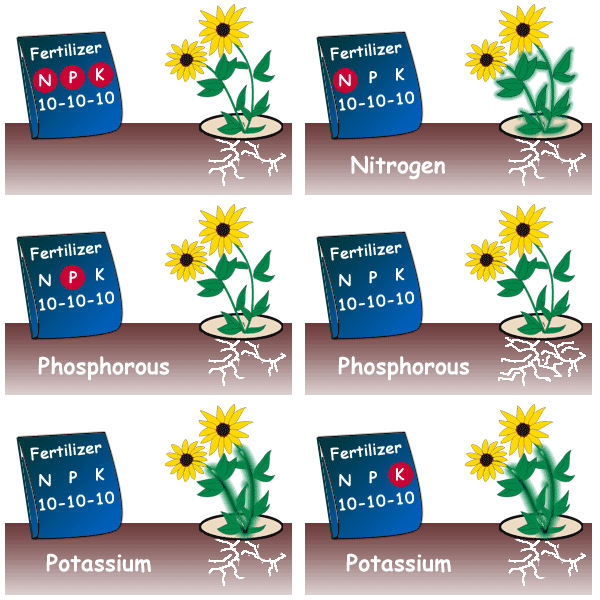
  • Fertilizing: fertilizing contain mineral salts that help plants to grow. SPANISH: Fertilización: los fertilizantes contienen sales minerales que ayudan a la planta a crecer.

  • Irrigation: when rainfail is not enough, farmer water their crops. There are different irrigation methods. SPANISH: Cuando la lluvia no es suficiente, los agricultores riegan sus cultivos.

  • Fumigation: farmers spray plants with pesticides to stop insects harming the crops. SPANISH: Fumigación: los agricultores pulverizan las plantas con pesticidas para parar a los insectos que dañan los cultivos.

  • Pruning: Some branches are cut from trees and bushes. This helps the rest of the plant to grow. SPANISH: Poda: algunas tamas se cortan de los árboles y arbustos. Esto ayuda al resto de la planta a crecer.

  • Harvesting: this is the final stage, when farmers collect mature crops from fields. SPANISH: Cosecha: es la fase final, cuando los agricultores recogen los cultivos maduros del campo.


Types of crops/Tipos de cultivos

There are different types of crops. We can classify them by how much water they need to grow.
SPANISH: Hay muchos tipos de cultivos. Podemos clasificarlos en función de cuánta agua necesitan para crecer.

  • Dry crops. These crops only need rainfall. Some examples are wheat, barley and olive trees. SPANISH: Cultivos de secano: estos cultivos solo necesitan agua de la lluvia. Algunos ejemplos son el trigo, la cebada y el olivo.
Wheat

Barley

Olive tree

  • Irrigated crops: Farmers need to water these crops. Some examples are corn, tomatoes and rice. SPANISH: Cultivos de regadío: los agricultores necesitan regar estos cultivos. Por ejemplo el maíz, los tomates y el arroz.
Wheat

Tomatoes

Rice


We can also classify crops by pant type:
SPANISH: También podemos clasificar los cultivos por el tipo de planta.

  • Herbaceous crops. These include cereals and garden plants such as tomatoes, lettuce and potatoes. They have to be planted every year. SPANISH: Cultivos herbáceos. Los cereales y las plantas de jardín como los tomates, lechugas y patatas. Tienen que ser plantados todos los años.


  • Trees and bushes. These include fruit trees, olive trees and vines. They are only planted once and grow to produce fruit.SPANISH: Árboles y arbustos. Esto incluye árboles frutales, olivos y viñas. Solo se plantan una vez y crecer para producir fruta.


ESQUEMA/OUTLINE (ESTUDIAR)/CLICK PARA AMPLIAR


WORDLIST:
- Crop farming: cultivos agrícolas.
- Food: comida.
- Raw materials: materias primas.
- Ploughing: arado.
- Sowing: siembra.
- Fertilizing: fertilización.
- Irrigation: riego/regadío.
- Fumigation: fumigación.
- Pruning: poda.
- Harvesting: Cosecha.
- Dry crops: cultivos de secano.
- Irrigated crops: cultivos de regadío.
- Wheat: trigo.
- Barley: cebada.
- Olive tree: olivo.
- Herbaceous crop: cultivo herbáceo.
- Tomatoes: tomates.
- Corn: maíz.
- Rice: arroz.
- Lettuce: lechuga. 
- Vines: viñedos.

domingo, 24 de febrero de 2019

VEGETATION

Vegetation is all plants in an area, region or country. Forest, shrubland, grassland and deserts are areas with different types of vegetation.
SPANISH: La vegetación o flora son todas las plantas de una zona, región o país. Los bosques, matorrales, praderas y desiertos son zonas con diferentes tipos de vegetación o flora.


FOREST/BOSQUE

A forest is an area where many trees grow close together. Some forests have only one type of tree. Other forests have many different types of trees, for example, rainforests. Forest need good conditions, such as high humidity and fertile soil.
SPANISH: Un bosque es una zona dónde muchos árboles crecen cerca y juntos. Algunos bosques solo tienen un tipo de árbol. Otros bosques tienen muchos tipos de árboles, por ejemplo la selva.
Un bosque necesitan buenas condiciones, como una alta humedad y suelo fértil.

Forest

Rainforest

SHRUBLAND/MATORRAL

Shurbland is an area dominated by bushes. Bushes grow in places with poor soil and low humidity. Sometimes, after a very long period of time, shrubland can grow into a forest.
SPANISH: El matorral es una zona dominada por arbustos. Los arbustos crecen en lugares con suelo pobre o poco fértil y baja humedad. Algnas veces, después de un periodo muy largo de tiempo, el matorral puede transformarse en un bosque.


GRASSLAND/PRADERA

Grassland is an area dominated by grasses. Grasslands are found in places with long periods of drought where forest cannot grow. Grasses die every year, but new grasses grow from thee seeds the following year. In Africa, grasslands are called savannah.
SPANISH: La pradera es una zona dominada por hierbas. Las praderas se encuentran en lugares con largos periodos de sequía dónde los bosques no pueden crecer. Las hierbas mueren cada año, pero nuevas hierbas se forman de las semillas al año siguiente. En África, las praderas se llaman sabanas.

Grassland

Savannah

DESERT/DESIERTO

A desert is an area with arid soil and very little water. There are very few plants.Cactuses grow in deserts because they need very little water. They store water in their stems. Temperatures can be very high during the day and very low at night.
SPANISH: Un desierto es una zona donde la tierra es árida y hay muy poca agua. Hay pocas plantas . Los cactus crecen en desiertos debido a que ellos necesitan muy poca agua y la almacenan en sus tallos. Las temperaturas pueden ser muy altas durante el día y muy bajas durante la noche.


CONCLUSION/OUTLINE (ESTUDIAR)


WORDLIST:
- Vegetation: vegetación, flora.
- Forest: bosque.
- Rainforest: selva.
- Tree: árbol.
- High humidity: alta humedad.
- Fertile soil: tierra fértil.
- Shrubland: matorral.
- Bush: arbusto.
- Low humidity: baja humedad.
- Poor soil: tierra pobre, poco fértil.
- Grassland: pradera.
- Grass: hierba.
- Drought: sequía.
- Desert: desierto.
- Cactuses: cactus.
- Arid soil: tierra árida.


HOW PLANTS LIVE

What do plants need to grow?


Plants only grow in places where they can get what they need to survive. The place where a plant lives is called its habitat.
SPANISH: Las plantas solo crecen en lugares donde pueden obtener lo que necesitan para sobrevivir. El lugar dónde vive una planta es su hábitat.


Unlike animals, plants make their own food. This process is called photosynthesis. Plants need sunlight, water, mineral salts and carbon dioxide to carry out photosynthesis.
SPANISH: Al contrario que los animales, las plantas fabrican su propia comida. Este proceso se llama fotosíntesis. Las plantas necesitan luz solar, agua, sales minerales y dióxido de carbono para llevar a cabo la fotosíntesis.


Plant sensivity.

Like animals, plants respond to changes in the environment. However, plants respond differently to animals because they do not have sense organs. Most of their respnses are movements related to growth.
SPANISH: Al igual que los animales, las plantes responden a los cambios del entorno. Sin embargo, las plantas responde de manera diferente a los animales debido a que las plantas no tienen órganos de los sentidos. La mayoría de sus respuestas están relacionadas con el crecimiento.


- The roots grow downwards, in search of humidity. Las raíces crecen hacia abajo, en busca de humedad.


- The stem and the leaves grow towards light. If the plant receives sunlight from one side, the stem and the leaves grow in that direction. El tallo y las hojas crecen hacia la luz Si la planta recibe luz solar de un lado, el tallo y las hojas crecen en esa dirección.

Phototropism

Some plants are capable of rapid movement. For example, the mimosa plant closes its leaves when it is touched.
SÀNISH: Algunas plantas son capaces de realizar movimientos reflejos. Por ejemplo, la mimosa cierra sus hojas cuando es tocada.

Mimosa


The life cycle of plants.

The life cycle of a plant includes the different stages of its life. Life cycles are not the same for all plants. There are two main groups of plants: annual and perennial.
SPANISH: El ciclo de vida de una planta incluye las diferentes etapas de su vida. El ciclo vital no es el mismo en todas plantas. Hay dos grupos principales de plantes: anuales y perennes.


Annual plants: These plants complete their lyfe cycle in one year. They are born, grow, reproduce in spring and they die in the summer. Annual plants disappear, but their seeds remain in the soil, and new plants grow again each spring. Poppies, sunflowers and cabbages are annual plants.
SPANISH: Plantas anuales. Estas plantas completan su ciclo vital en un año. Nace, crecen y se reproducen en primavera pero mueren en verano. Las plantas anuales desaparecen, pero sus semillas permanecen en la tierra, y  nuevas plantas crecen de nuevo cada primavera. Las amapolas, el girasol y la col son plantas anuales.

Poppies

Sunflowers

Cabbage


Perennial plants: These plants have got a long life cycle. Some trees, such as olive trees and yews, live for thousands of years. Their trunks and roots grow throughout their life cycle. 
SPANISH: Plantas perennes. Estas plantas tienen una larga vida. Algunos árboles , como el olivo  y los tejos, viven cientos de años. Sus troncos y raíces crecen a lo largo de su vida.

Olive tree

Yew


There are two types of perennial plants: perennial grasses and trees and bushes.
SPANISH: Hay dos tipos de plantas perennes: las hierbas perennes y los árboles y arbustos.


CONCLUSION/OUTLINES (ESTUDIAR)


WORDLIST:
- Plants: plantas.
- Habitat: hábitat.
- Photosynthesis: fotosíntesis.
- Grow: crecer.
-  Sunlight: luz solar.
- Water: agua.
- Mineral salts: sales minerales.
- Carbon dioxide: dióxido de carbono.
- Growth: crecimiento.
- Humidity: humedad.
- Life cycle: ciclo de vida/ciclo vital.
- Annual plants: plantas anuales.
- Spring: primavera.
- Summer: verano.
- Poppies: amapolas.
- Sunflowers: girasoles.
- Cabbges: repollos, coles.
- Soil: tierra.
- Olive tree: olivo.
- Yew: tejo.


EXPERIMENTO FOTOTROPISMO