Cells obtain and use nutrients. Cells also respire and release waste substances.
Some cells are autotrophic. They make their food by combining water, carbon dioxide and energy from the Sun.
Other cells are heterotrophic. They obtain nutrients from other living organisms. Cells use nutrients and oxygen to obtain energy, grow and regenerate.
They also produce waste substances. They release the waste substances through the cell membrane.
How does the function of interaction work in cells?
Cells react to internal changes by producing and releasing substances. They grow, change shape or change position.
How does the function of reproduction work in cells?
Cells reproduce by dividing themselves. This is called cell division. Each time a cell divides, it makes a copy of its genetic material. The cytoplasm then divides into two cells.
Living organisms are made up of cells.
Living organisms carry out the vital functions: nutrition,interaction
and reproduction.
This is what differentiates living organisms from non-living things.
Nutrition
Interaction
Reproduction
What are cells?
Cells are the smallest living parts
of living organisms. They carry
out the vital functions of nutrition,
interaction and reproduction as
well.
All cells have three parts: a cell
membrane, cytoplasm and genetic
material.
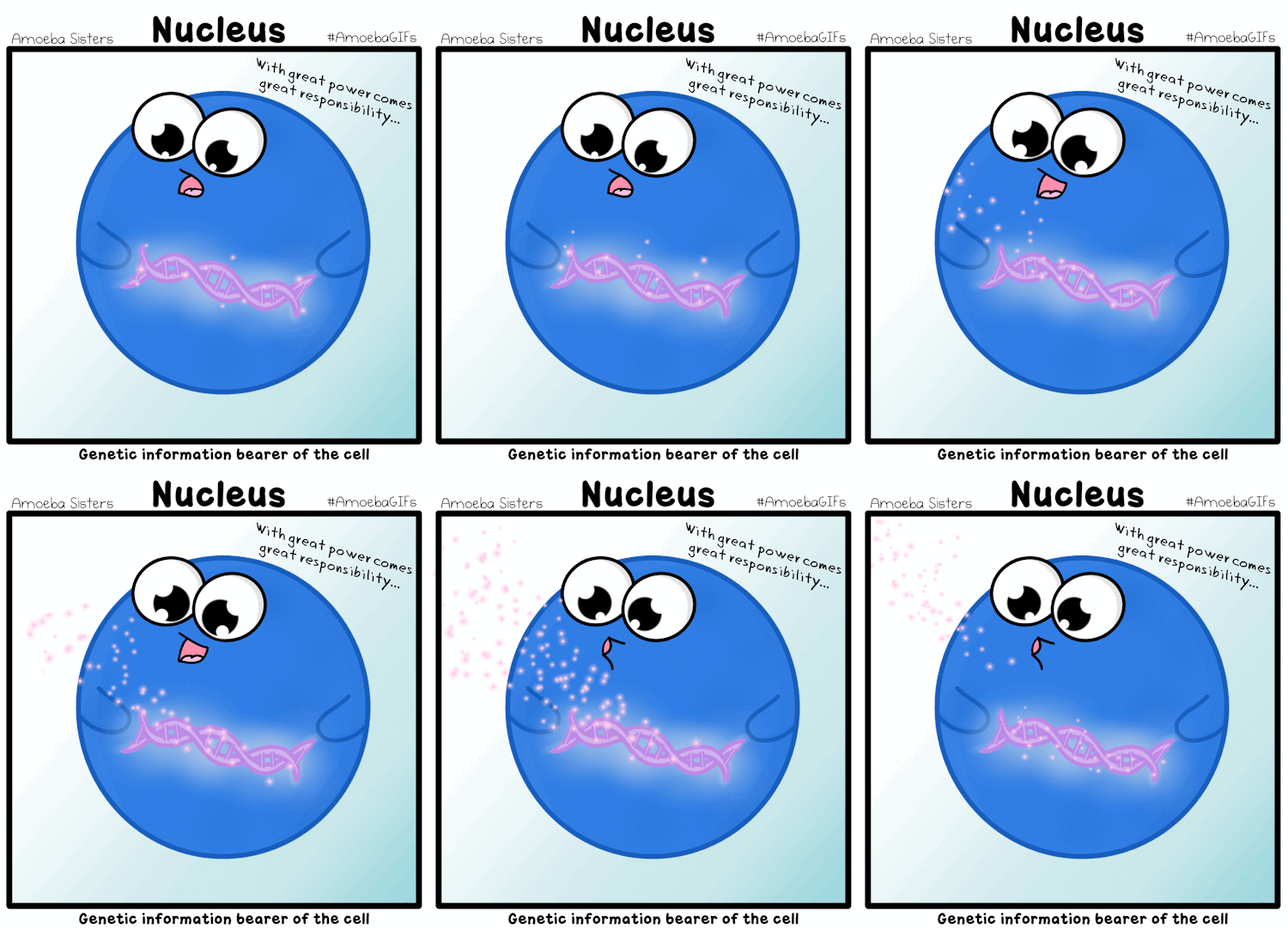
Genetic material controls the
function of the cell.
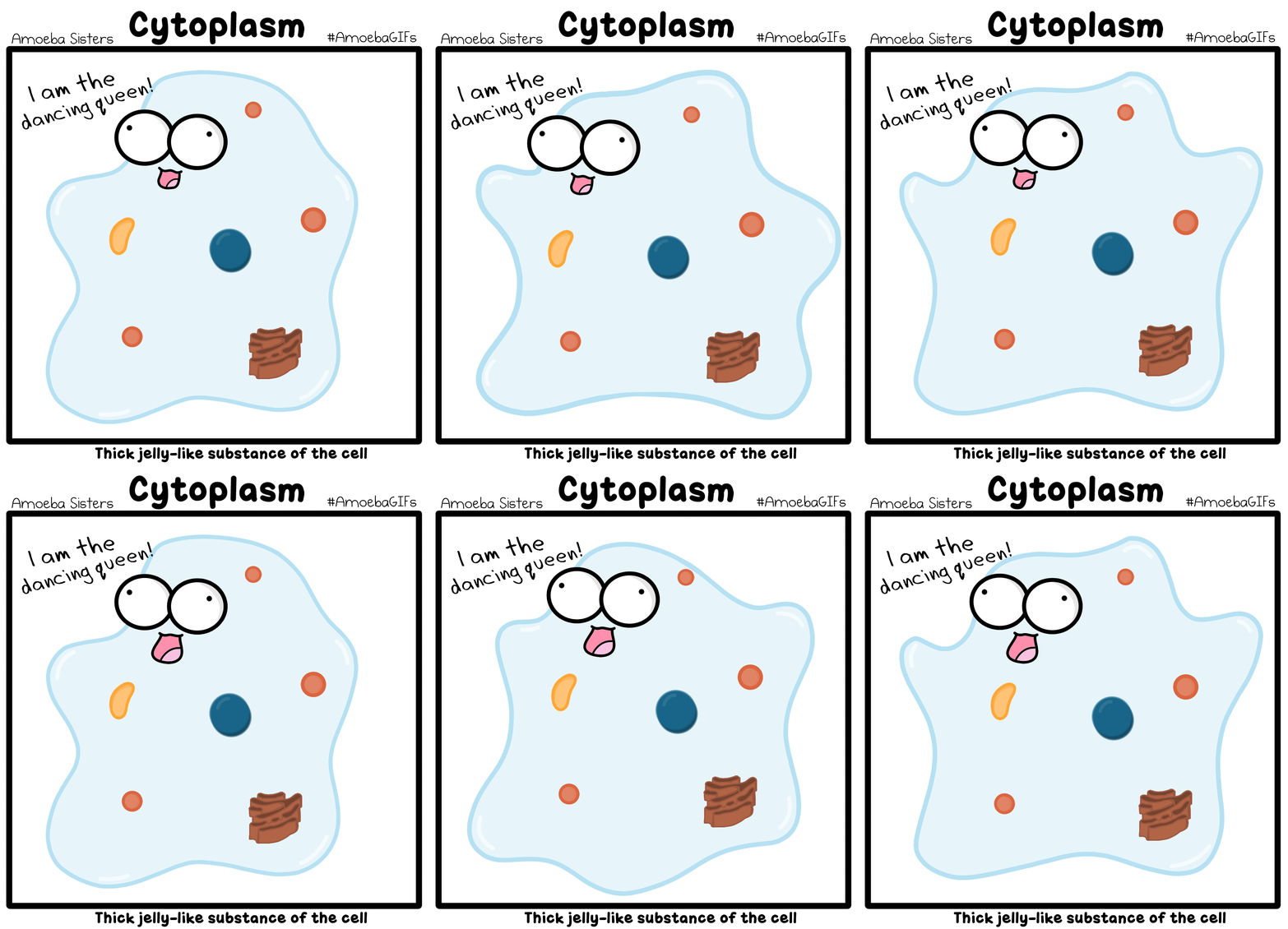
Cytoplasm is a gel inside the cell.
The cell membrane is a thin,
flexible cover surrounding the
cell. It regulates the exchanges of
substances between the cell and
the exterior.
Cell membrane
Nucleus
Cytoplasm
What are the different
types of cells?
Different types of living organisms
have different types of cells.
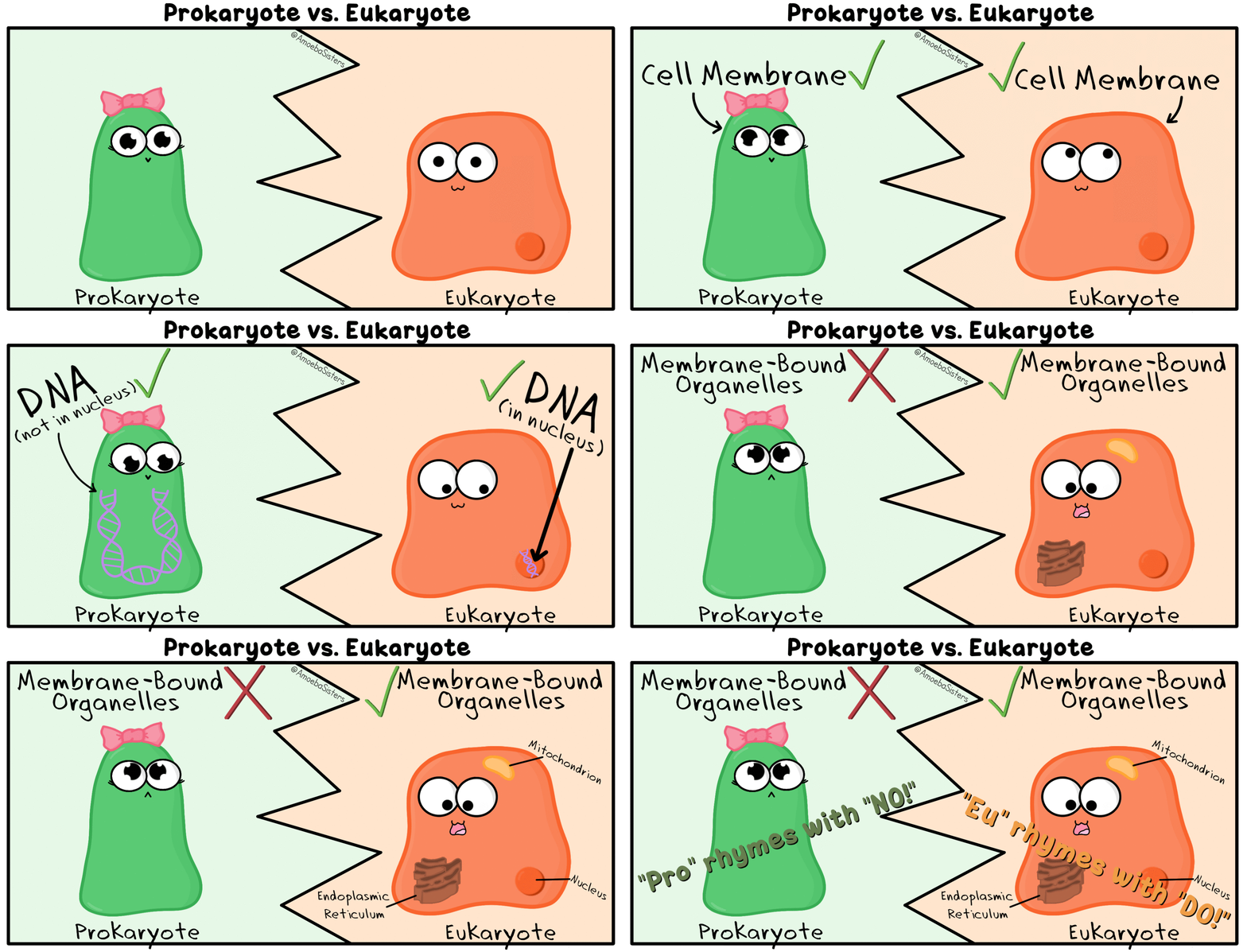
There are two main types of cells.
• Prokaryotic cells have the
genetic material within a
certain area of the cytoplasm.
They don’t have a nucleus.
Prokaryotic cells have a rigid
cell wall surrounding the cell
membrane. They often have
flagella to help them move.
• Eukaryotic cells have the
genetic material inside a
nucleus. They have many
different types of organelles.
Organelles perform different
functions, like the organs in the
body. Some of these cells have
a rigid cell wall surrounding
the cell membrane and others
don’t.