Para saber todavía más sobre las siguientes épocas.
PREHISTORY
EDAD ANTIGUA
ANCIENT GREECE
ROMAN EMPIRE
CLEOPATRA
MIDDLE AGES
¿Cómo sería tu vida en la Edad Media?
EARLY MODERN AGE
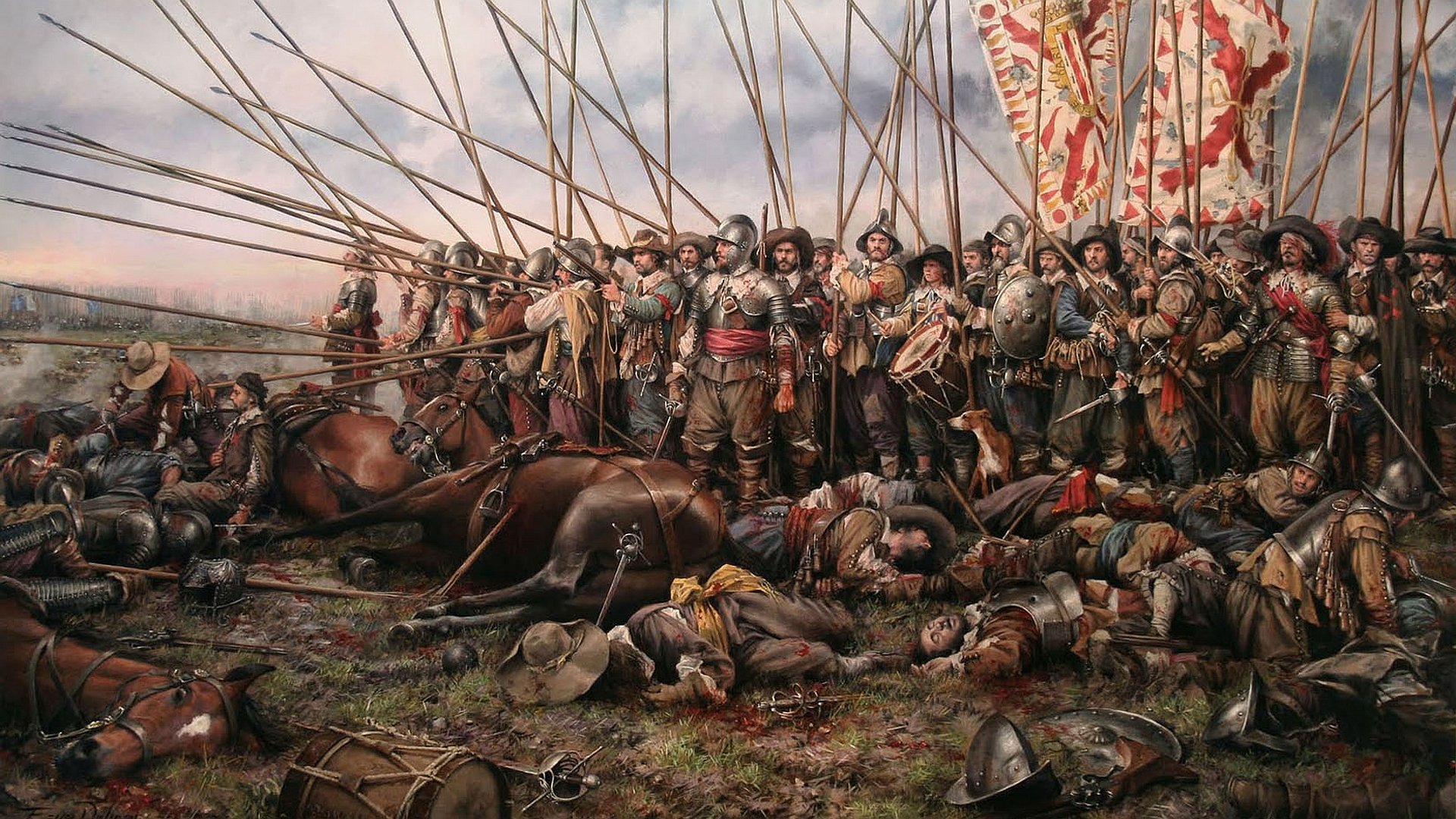
Victorias de la Historia de España
MODERN HISTORY
Revolución Francesa
Revolución Industrial
Napoleón
viernes, 9 de febrero de 2018
THE MODERN AGE
The Modern Age started in 1789. In the 19th Century there were many important changes and inventions. This was called the Industrial Revolution.
SPANISH: La Edad Contemporánea empezó en el año 1789. En el siglo XIX hubo muchas cambios importantes e inventos. Esto se llamó Revolución Industrial.
Steam trains were invented. People and products could move around more quickly than before. Rich people owned the factories. They lived in big, confortable houses. They had servants. Children in rich families went to school.
SPANISH: Se inventó la locomotora de vapor. Las personas y los productos pudieron desplazarse mucho más rápido que antes. Los ricos eran los dueños de las fábricas. Ellos vivían en casas grandes y cómodas. Tenían sirvientes. Los niños de las familias ricas iban al colegio.
Steam train
Old factory
Many people moved from the countryside to towns and cities. Factories appeared. They used machines to make lots of products. Ordinary people worked in the factories. Their homes weren't very confortable. Their children worked in the factories too.
SPANISH: Muchas personas se mudaron del campo a los pueblos y ciudades. Las fábricas aparecieron. Se usaban máquinas para fabricas muchos productos. La gente corriente trabajaba en las fábricas. Sus hogares no eran muy cómodos. Sus hijos también trabajaban en las fábricas.
Workers
Children working
In the 20th century people's lives were better. Ordinary people's homes became more comfortable. There were new machines for washing clothes, cooking and cleaning. Cars, buses and planes were invented, so people could move around more easily.
SPANISH: En el siglo XX la vida de la gente mejoró. La casa de la gente común llegó a ser más cómoda. Había nuevas máquinas para lavar ropa, cocinar y limpiar. Se inventaron coches, autobuses y aviones, por eso la gente pudo desplazarse más fácilmente.
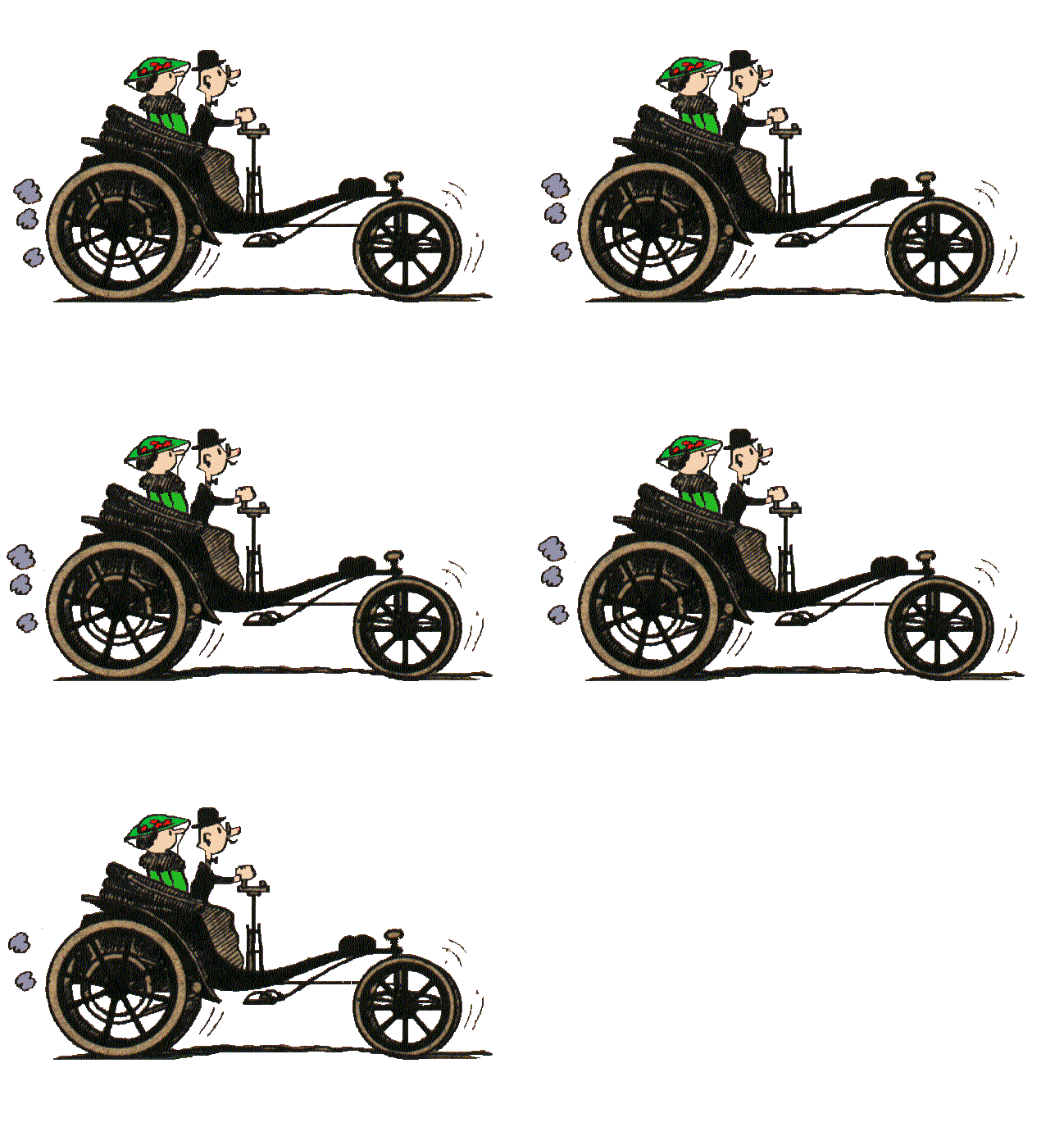
Ancient car
Ordinary people could see a doctor and go to school. Entertainment changed because the cinema, the radio and the television were invented. Things are still changing very quickly now!
SPANISH: La gente común podía ir al médico o a la escuela. El entretenimiento cambió debido a que se inventó la radio, el cine y la televisión. ¡Las cosas están todavía cambiando muy rápidamente!
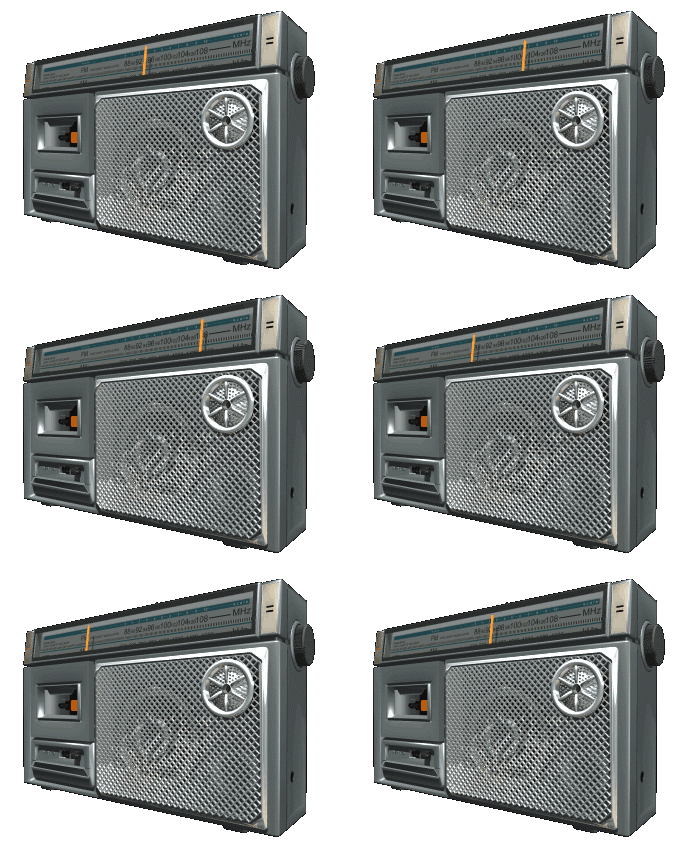
Radio
Television
Cinema
OUTLINE/CONCLUSION (¡¡ESTUDIAR!!)
Modern Age Outline
WORDLIST:
- Steam train: locomotora de vapor.
- Rich children go to school: los niños ricos van al colegio.
- Poor people work in factories: los pobres trabajan en las fábricas.
PARA APRENDER MÁS SOBRE LA EDAD CONTEMPORÁNEA (NO ESTUDIAR)
LA BELLE EPOQUE (ESPAÑOL)
LOS AÑOS DE LA LOCURA (ESPAÑOL)
ÉRASE UNA VEZ LA TIERRA (ESPAÑOL)
GOODBYE!
jueves, 8 de febrero de 2018
THE EARLY MODERN AGE
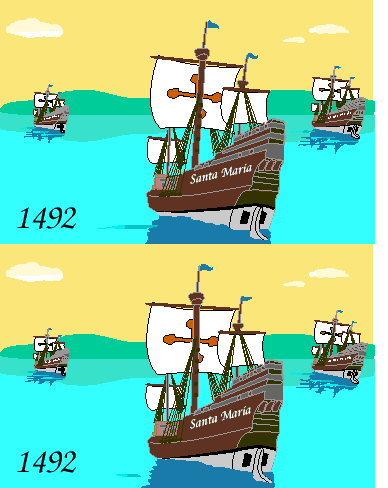
The Early Modern Age started in 1492, in that year Columbus discovered America. After explorers sailed around the world and discovered many places.
SPANISH: El principio de la Edad Moderna empezó en 1492, el año en que Colón descubrió América. Después, los exploradores navegaron alrededor del mundo y descubrieron muchos lugares.
The printing press was invented in the 15th century. After that there were more books.
SPANISH: La imprenta se inventó en el siglo XV. Después de eso hubieron más libros.
Gutenberg invented the printing press
Imprenta de Gutenberg
Ships were better and faster than before.
SPANISH: Los barcos fueron mejores y más rápidos que antes.
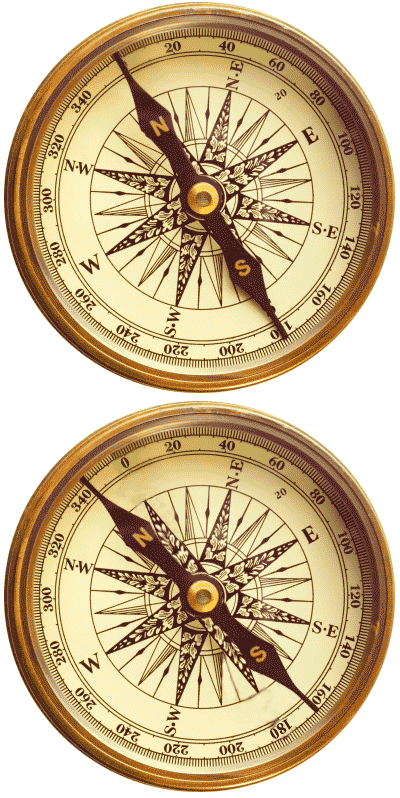
The compass was invented and explorers made better maps.
SPANISH: Se inventó la brújula y los exploradores hicieron mejores mapas.
Compass
Map
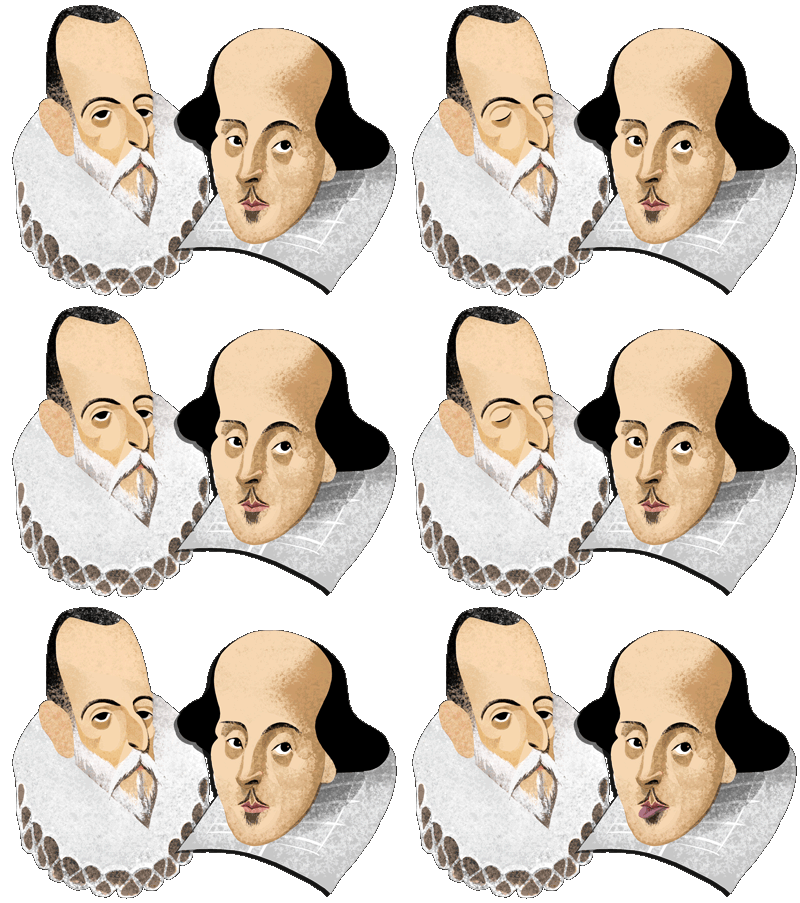
Two of history's most famous writers lived in this period:
- Shakespeare wrote plays such as Romeo and Juliet.
- Cervantes wrote Don Quixote, one of the first ever novels.
SPANISH: Dos de los más famosos escritores vivieron en esta época.
- Shakespeare escribió obras como Romeo y Julieta.
- Cervantes escribió Don Quijote, una de las primeras novelas modernas.
Cervantes and Shakespeare
This period in Spain is called the Golden Age. It was an important time for art and literature. Other Spanish writers such as Lope de Vega and artist such as El Greco and Diego Velázquez also lived then.
SPANISH: En España, esta época es llamada el Siglo de Oro. Fue una época importante para el Arte y la Literatura. Otros escritores españoles como Lope de Vega y artistas como El Greco y Diego Velázquez también vivieron en esta época.
Velázquez
El triunfo de Baco, por Velázquez (1628-1629)
El bufón don Sebastián de Morra (1645)
Las Meninas, por Velázquez, 1656
Spain conquered many lands in America, Asia and Africa. It established a big empire.
SPANISH: España conquistó muchas tierras en América, Asia y África. Creó un gran imperio.
Imperio Español con Felipe II
In 1789, there was a revolution in France. A revolution is a very big change. Before then countries had kings or queens. The people in France decided they didn't want a king anymore. That was the end of the Early Modern Age. SPANISH: En el año 1789, hubo una revolución en Francia. Una revolución es un cambio muy grande. Antes de eso los países tenían reyes o reinas. La gente en Francia decidió que no querían reyes nunca más. Esto significó el final de la Edad Moderna.
The Middle Ages started in 476 A.D. In the 8th century, Muslims came to the Iberian Peninsula from the North Africa. They conquered the south and called it al-Andalus. In the north there were small Christian kingdoms.
SPANISH: La Edad Media comenzó en el año 476 D.C. (Después de Cristo). En el siglo VIII, los musulmanes llegaron a la Península Ibérica desde el norte de África. Ellos conquistaron el sur y llamaron a ese territorio al-Andalus. En el norte había pequeños Reinos Cristianos.
CHRISTIAN KINGDOMS
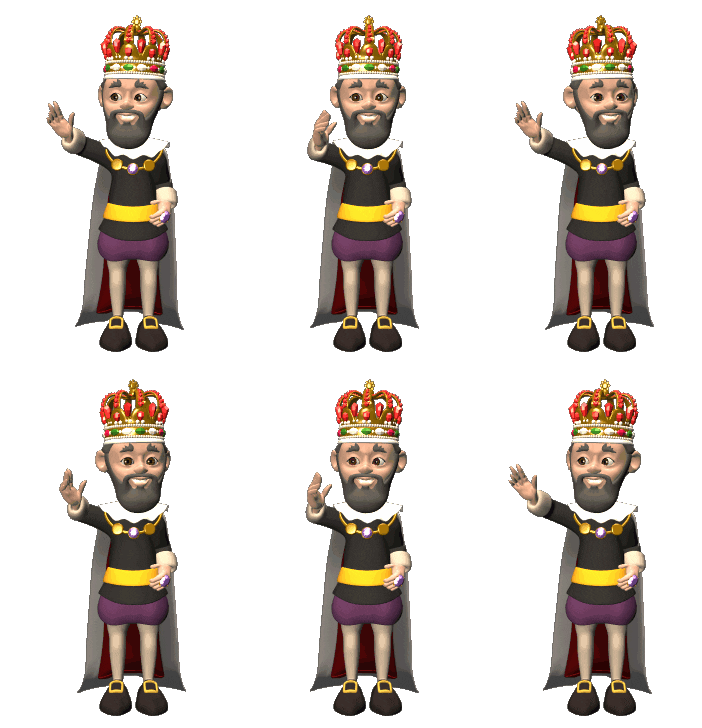
In the Christian kingdoms the king and the rich nobles lived in castles. They had soldiers and servants. People built many churches.
SPANISH: En los reinos Cristianos el rey y los nobles vivían en castillos. Ellos tenían soldados y sirvientes. Las personas construían muchas iglesias.
King
Nobles
Soldier
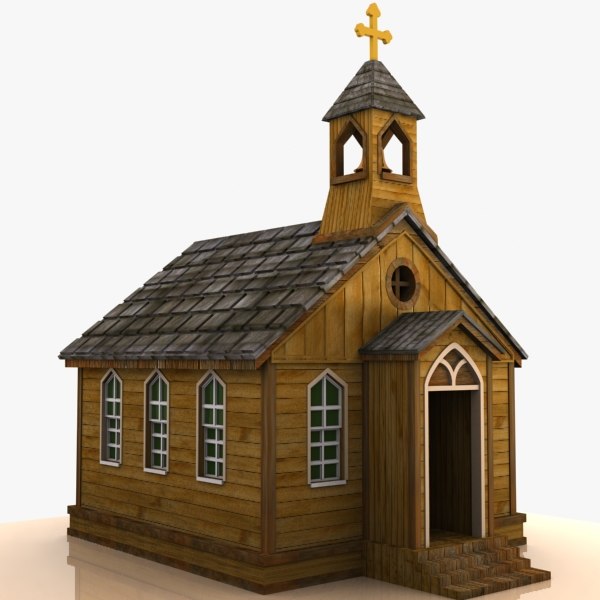
The church was very important. There were priest and monks. Monks lived in monasteries. Most people were poor peasants. They lived in villages and worked on the land.
SPANISH: La iglesia era muy importante. Había sacerdotes y monjes. Los monjes vivían en monasterios. La mayoría de las personas eran campesinos pobres. Ellos vivían en aldeas y trabajaban en el campo.
Church
Monasteries
Poblado medieval cristiano
Ciudad medieval
AL-ANDALUS
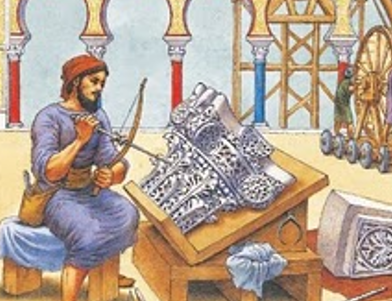
In al-Andalus there were Christians and Muslims. There were more towns and cities than in the Christian kingdom. There were also artisans and merchants who trated.
SPANISH: En Al-Andalus habían cristianos y musulmanes. Había más pueblos y ciudades que en los reinos Cristianos. Había también artesanos y mercaderes con los que comerciar.
Ciudad Al-Andalus
Merchant
Artisan
People built many mosques and beautiful palaces, such as the Alhambra in Granada.
SPANISH: Las personas construyeron muchas mezquitas y hermosos palacios, tales como la Alhambra de Granada.
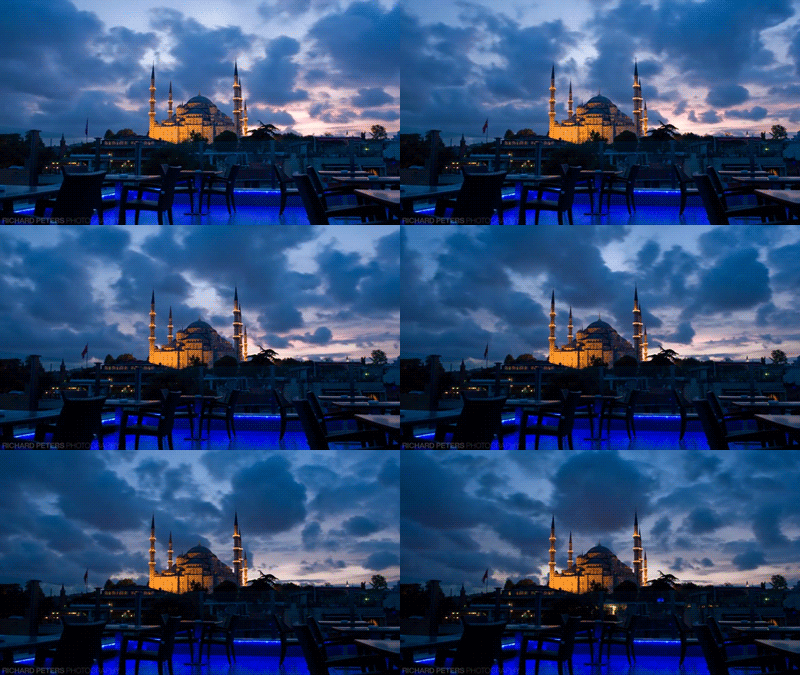
Mezquita de Santa Sofía (Estambul, Turquía)
Alhambra de Granada
Alhambra y Granada
The Christian kingdoms slowly conquered al-Andalus. This is called Reconquista. In 1492 the Christians conquered Granada, the last Muslim kingdom. This was the end of the Reconquista. The Middle Ages ended then too.
SPANISH: Los reinos Cristianos conquistaron lentamente Al-Andalus. Esto se llamo Reconquista. En el año 1492, los cristianos conquistaron Granada, el último reino musulmán. Esto significó el final de la Reconquista y de la Edad Media.









.jpg/1200px-Vel%C3%A1zquez_-_El_Triunfo_de_Baco_o_Los_Borrachos_(Museo_del_Prado%2C_1628-29).jpg)
.jpg/1200px-Vel%C3%A1zquez_%E2%80%93_Buf%C3%B3n_don_Sebasti%C3%A1n_de_Morra_(Museo_del_Prado%2C_c._1645).jpg)