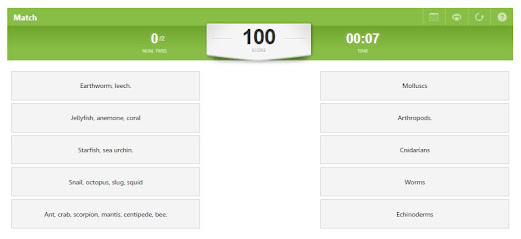
¡JUEGA!

Spain’s Constitution, its Head of State and Central Government

The Spanish Constitution is the supreme law that establishes all citizens’ rights and responsibilities. On the 6th of December, 1978 there was a referendum about the Constitution. Spanish citizens over the age of eighteen voted in favour of the current Constitution.

This Constitution defines Spain as a democratic state, and a constitutional monarchy. The Constitution states that sovereignty, or power, belongs to the people. It also establishes the State’s institutions: the Head of State, the Central Government, the Parliament and the Courts of Law.

The Spanish state is a monarchy, so the head of state is the monarch. The monarch’s main function is to represent Spain as Head of State, sanction laws and act as commander-in-chief of the Armed Forces.

In June of 2014, King Juan Carlos I abdicated in favour of his son, Crown Prince Felipe, who was proclaimed King Felipe VI by the Parliament.

The Central Government is the executive power. It is responsible for running the State. Its mission is to enforce laws, defend the State and manage public affairs. The Government is formed by the president and the ministers.

The President is chosen by the Congress of Deputies and named by the monarch. He or she is in charge of the government’s administration and coordination.

The ministers are proposed by the president and named by the monarch. They are responsible for the ministries, like foreign affairs and the economy.

What are the Parliament and the Courts of Law?
The Parliament is the legislative power and it has two chambers: the Congress of Deputies (350 Deputies) and the Senate (266 Senators). The Parliament is responsible for making and approving laws and supervising the government.

Spanish citizens over the age of eighteen vote for the members of the two chambers in elections held every four years.

The Courts of Law are the judicial power. They are in charge of enforcing laws and resolving disputes. They can impose sanctions on people who break the law. They are made up of independent magistrates and judges. The Supreme Court and the Constitutional Court are the main Courts of Law in Spain.


What are the different types of invertebrates?
Most animals on the Earth are invertebrates. There are five main types of invertebrates.


Cnidarians
 |
| Jellyfish |
They live in water.
They have tentacles.
Echinoderms
 |
| Sea Urchin |
 |
| Starfish |
They live in salt water.
They are symmetrical, often shaped like a star.
They often have spines .
Some have armour plates covering their bodies.
Worms
 |
| Earthworm |
They live on land or in water.
They have long, sometimes flat, bodies.
Their bodies are divided intorings.
Molluscs


They live on land or in water.
They have internal organs inside a covering called a mantle .
They sometimes have an organ called a foot. It helps them move.
They often have a hard shell.
Arthropods
 |
| Centipede |
 |
| Butterfly |
 |
| Espiritrompa |
 |
| Ant |
 |
| Bee |
They live on land or in water.
They are covered in armour plates.
Different species have different numbers of legs.
Some can fly.
INVERTEBRATES